
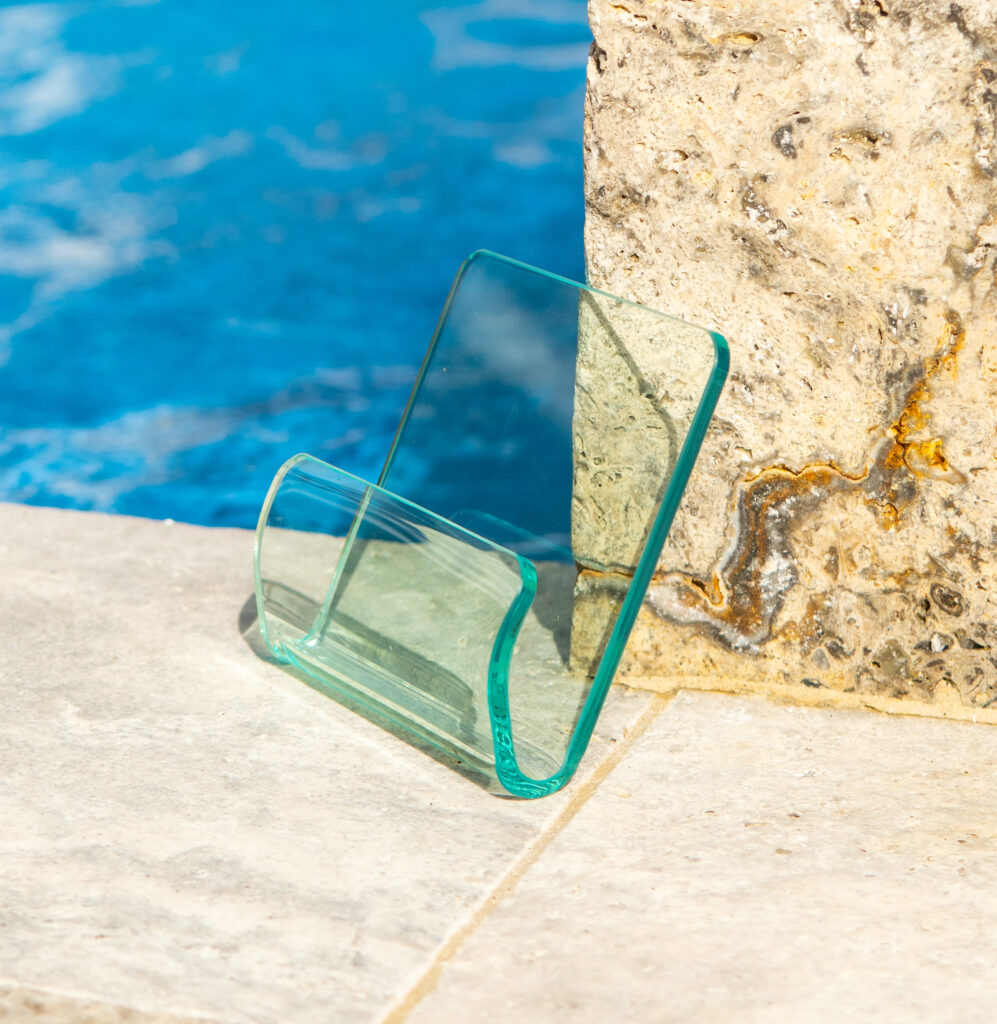
For many pool owners, the primary focus is often on aesthetics clean lines, modern finishes, and creating a visually striking outdoor space. While these design goals are understandable, it is the pool builder’s responsibility to ensure that safety is not overlooked in the pursuit of appearance.
For pool builders, pool safety is not just about signage, rules, or supervisions, it begins at the design and construction stage. Even the most beautiful pool can pose risks if critical safety considerations are ignored. Pools inherently create wet, slippery environments, and swimmers of any age or ability can slip, misstep, or become fatigued unexpectedly.
That’s why integrating physical safety features into the pool’s design is essential. By guiding pool owners and reinforcing the importance of safety-focused decisions, builders can deliver pools that balance visual appeal with practical protection.
Thoughtful pool safety design helps protect users, reduce liability, and demonstrate professional responsibility is the key priorities for today’s pool builders.
Common Pool Safety Risks Builders Should Address
Many pool safety incidents don’t happen during active swimming but during transitions—entering, exiting, or standing near the water. These are predictable risk points best addressed during the design phase to improve overall pool safety.
Slippery Pool Edges and Steps
Entry and exit areas are among the highest-risk zones in any pool. Wet surfaces, smooth finishes, and shifting body weight increase the likelihood of slips and falls. Without a secure point of contact, even a small misstep can result in injury.
From a pool safety perspective, providing reliable support in these high-traffic areas is critical. Strategically placed handholds help users stabilize themselves when stepping in or climbing out, reducing fall risk during the most vulnerable moments of pool use.
Difficulty Entering and Exiting the Pool
Even simple pool entry and exit present challenges, especially with wet surfaces, awkward step spacing, or limited grip points. These challenges increase pool safety risks for a wide range of users.
Children, elderly swimmers, and guests unfamiliar with the pool layout are particularly vulnerable. Designing pools with accessible support points improves pool safety by giving users added confidence, balance, and control during entry and exit.
Lack of Support in Unexpected or Emergency Situations
In moments of fatigue, panic, or loss of balance, swimmers instinctively look for something solid to hold onto. Without immediate support, minor issues can escalate into serious pool safety incidents.
A properly placed handhold provides stability when it matters most, helping swimmers regain control and recover safely.
Why Pool Safety Issues Occur in Modern Pool Designs
Many pool designers prioritize aesthetics and water flow over safety considerations. While clean lines and smooth surfaces enhance visual appeal, they often provide little grip or stability when wet.
Ladders alone don’t always provide enough support for pool safety. Because ladders stay fixed in place, they fail to provide continuous support in critical transition areas where users need it most.
Balancing aesthetics, functionality, and pool safety requires intentional design choices that go beyond traditional layouts.
Handholds: A Critical Pool Safety Feature for Builders
Handholds are a simple yet highly effective way to improve pool safety without compromising design. They give swimmers a stable point of contact for entry, exit, resting, and recovery, reducing slip and fall risks.
From a builder’s perspective, handholds represent a proactive pool safety solution—one that enhances usability, supports a wide range of swimmers, and adds value to the finished pool.
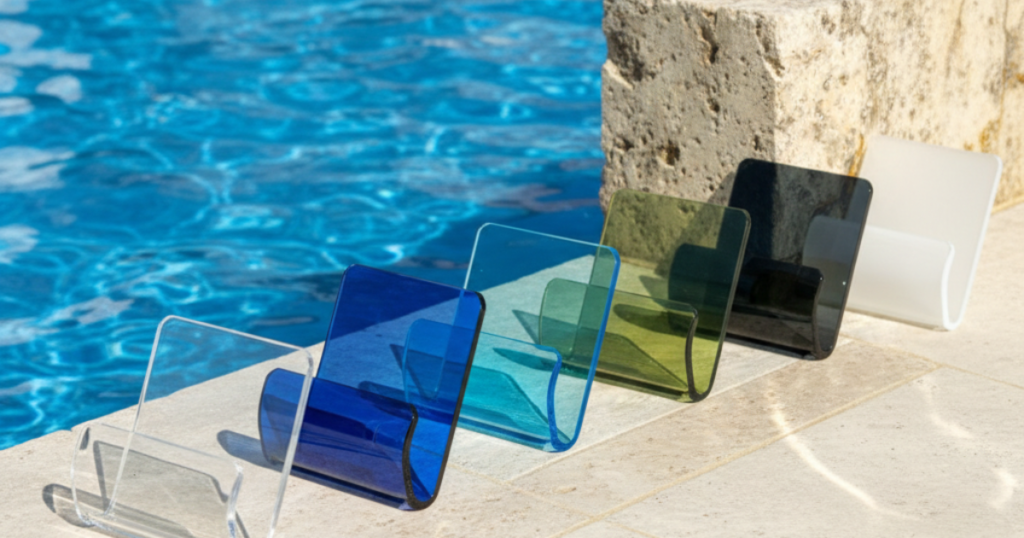
We design our modern handholds to integrate seamlessly into today’s pool aesthetics. We offer transparent and semi-transparent finishes—dark blue, clear, frosted, light blue, ghost gray, gloss black, and ghost white—so builders can enhance pool safety without compromising the pool’s intended look and feel.
Pool Safety as a Professional Standard
Integrating physical safety features into pool design demonstrates a commitment to quality, responsibility, and long-term performance. By addressing key risk areas and adding handholds where needed, pool builders create safer pools that balance design and function.
Ultimately, pool safety is not an add-on—it’s a design decision. Builders who prioritize safety during construction deliver pools that are safer to use, easier to maintain, and better aligned with modern expectations for performance and protection.
Build safer, ISPSC-compliant pools without compromising your design. Contact us to find the right pool safety solution for your next project.