
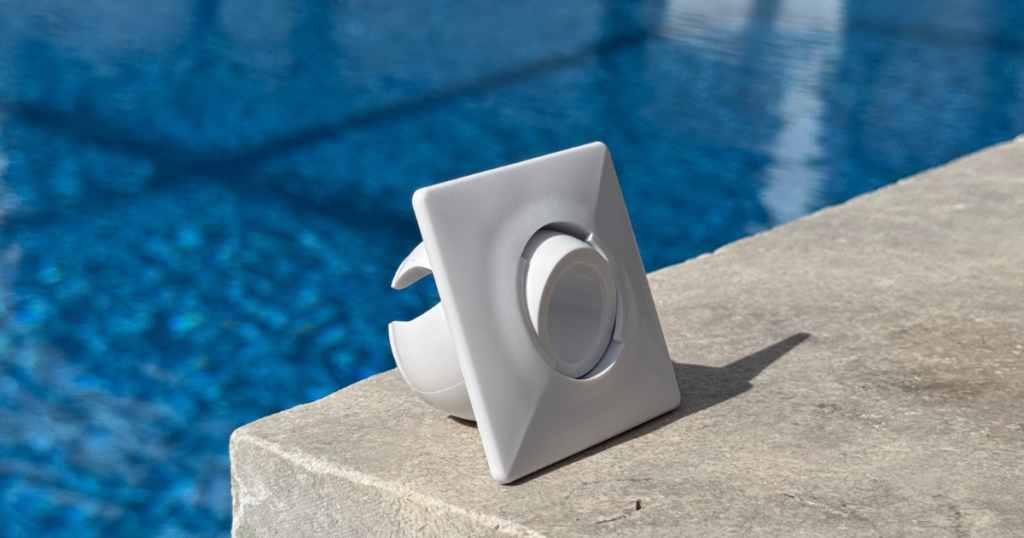
Pool return fittings play a much larger role than simply moving filtered water back into the pool. They directly influence how water circulates, how heat spreads, and how evenly chemicals mix throughout the vessel. When return fittings are poorly placed or incorrectly aimed, pools can develop dead zones, temperature inconsistencies, and chemical imbalances even when the pump, filter, and heater are properly sized. For builders, these issues often surface after startup, leading to additional adjustments, service calls, or client concerns.
How Return Fittings Distribute Heat and Chemicals
Effective heat and chemical distribution depends on creating consistent circulation patterns across the entire pool. Return fittings help establish these flow paths by directing water across walls, steps, benches, and deep areas where stagnant water can form. Properly aimed returns prevent hot spots, cold pockets, and uneven sanitizer levels, allowing heaters to perform efficiently and chemicals to mix quickly and evenly. This balanced circulation improves water quality, reduces chemical demand, and helps the pool reach stable operating conditions faster.
Builder-Controlled Design and Installation Factors
Builders have direct control over several return fitting variables that impact performance, including placement, depth, spacing, and jet direction. The number of returns and their orientation should reflect pool shape, size, and features rather than relying on a one-size-fits-all approach. In renovations, resurfacing can alter pipe depth and alignment, reducing return effectiveness if standard fittings are reused. Purpose-built return fittings designed for renovations help restore proper flow direction without demolition or pipe extensions.
Long-Term Performance, Finish Protection, and Fewer Callbacks
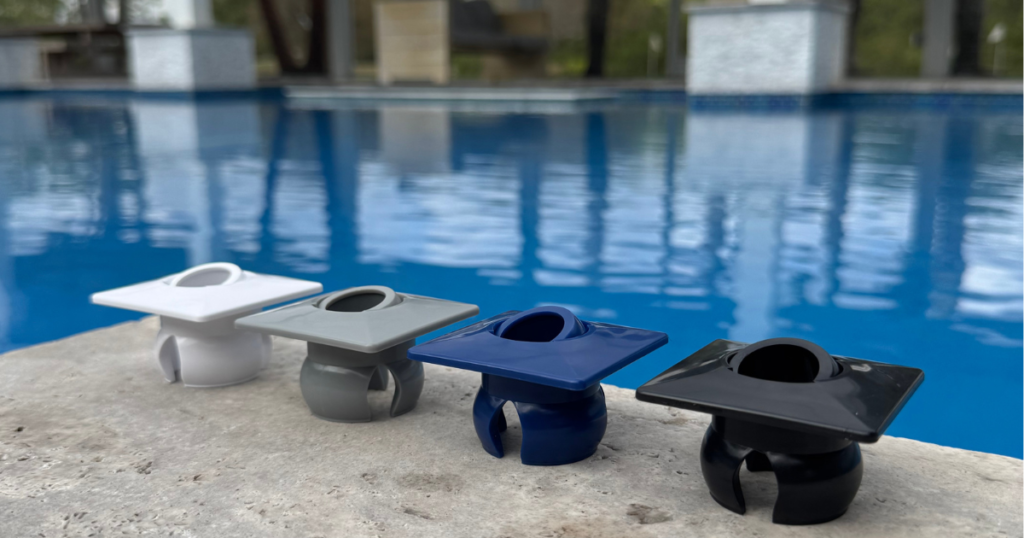
Balanced circulation protects more than water quality. It also helps preserve pool finishes by preventing localized scaling, staining, and surface degradation caused by concentrated discharge points. Purpose-built return fittings with optimized water flow and velocity allow builders to precisely control direction and speed, improving overall circulation and system performance. Easy-press, tool-free installation into standard 1-1/2” plumbing simplifies startups and reduces install time, while a secure, leak-free internal wedge design ensures long-term stability without movement or rework. Durable, corrosion-resistant PVC construction withstands pool chemicals and harsh conditions, and multiple color options allow returns to blend cleanly with surrounding finishes. For builders, choosing a return fitting that installs quickly, performs consistently, and delivers a modern, square-face appearance leads to smoother startups, fewer callbacks, and higher overall client satisfaction.
Final Takeaway for Pool Contractors
Pool return fittings may seem like minor components, but they play a critical role in overall pool performance. Proper return placement and direction help ensure even heat distribution, consistent chemical mixing, and balanced circulation across the entire pool. For builders, giving return fittings the attention they deserve leads to cleaner finishes, smoother startups, and fewer callbacks. By treating return fittings as a performance tool and not just a plumbing requirement, builders can deliver pools that operate better, last longer, and meet higher client expectations.
Build better-performing pools with confidence. Explore our return fittings or contact us to find the right circulation solution for your project→